Sunday, April 7, 2013

Third Trimester -- Music I

Third Trimester for Music I

Required Listening for the 3rd Trimester:

--Clair de lune -- O Fortuna -- Dance of the Knights -- Pierrot Lunaire
--Rite of Spring -- Last movement of Shostakovich's 5th Symphony

Music in the 20th Century:

Transitions from the Romantic Period:  Gustav Mahler, Claude Debussy, Maurice Ravel

)
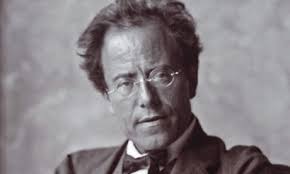
Gustav Mahler  (1860-1911)
He was a late-Romantic Austrian composer and one of the leading conductors of his generation. He was born in the village of Kalischt, Bohemia, in what was then the Austrian Empire, now Kaliště in the Czech Republic. His family later removed to nearby Iglau (now Jihlava), where Mahler grew up.
As a composer, Mahler acted as a bridge between the 19th-century Austro-German tradition and the modernism of the early 20th century. While in his lifetime his status as a conductor was established beyond question, his own music gained wide popularity only after periods of relative neglect which included a ban on its performance in much of Europe during the Nazi era (Mahler was Jewish). After 1945 the music was discovered and championed by a new generation of listeners; Mahler then became a frequently performed and recorded composer, a position he has sustained into the 21st century.


Claude Debussy   (1862 – 1918)
He was a French composer. Along with Maurice Ravel, he was one of the most prominent figures associated with Impressionist music, though he himself intensely disliked the term when applied to his compositions.

His music is noted for its sensory component and frequent avoidance of tonality. Debussy's work usually reflected the activities or turbulence in his own life. In French literary circles, the style of this period was known as symbolism, a movement that directly inspired Debussy both as a composer and as an active cultural participant.  He may have grown fond of Wagner's use of symbolism, but he did not imitate his emotionalism.  Beginning in the 1890s, Debussy developed his own musical language largely independent of Wagner's style, collared in part from the dreamy, sometimes morbid romanticism of the Symbolist Movement.

One of his most popular pieces is "Clair de lune" which comes from a larger work called Suite bergamasque (1890).  This is one of his earlier pieces.  Its dreamy quality is quite evident:

"Clair de lune" showing the music played    This is required listening.

For those with a more technical understanding of music, this is a summary of Debussy's musical style:

Features of Debussy's music, which "established a new concept of tonality in European music":
  1. Glittering passages and webs of figurations which distract from occasional absence of tonality;
  2. Frequent use of parallel chords which are "in essence not harmonies at all, but rather 'chordal melodies', enriched unisons"; some writers describe these as non-functional harmonies;
  3. Bitonality, or at least bitonal chords;
  4. Use of the whole-tone and pentatonic scale;
  5. Unprepared modulations, "without any harmonic bridge."


Carl Orff   (1895 – 1982)
He was a 20th-century German composer, best known for his cantata Carmina Burana (1937). In addition to his career as a composer, Orff developed an influential approach of music education for children.

His Carmina Burana was hugely popular in Nazi Germany after its premiere in Frankfurt in 1937.  It is probably the most famous piece of music composed and premiered in Nazi Germany. It was in fact so popular that Orff received a commission in Frankfurt to compose incidental music for A Midsummer Night's Dream, which was supposed to replace the banned music by Mendelssohn.

The work was based on thirteenth-century poetry found in a manuscript dubbed the Codex latinus monacensis found in the Benedictine monastery of Benediktbeuern in 1803 and written by the Goliards; this collection is also known as Carmina Burana. While "modern" in some of his compositional techniques, Orff was able to capture the spirit of the medieval period in this trilogy, with infectious rhythms and simple harmonies.  Occasionally advanced Chaminade Latin students will translate the texts for class.

Carmina Burana -- Over 10 million hits!  This is required listening.

Translation:  
"O Fortune, like the moon of ever changing state, hou are always waxing or waning; hatefl life now is brutal, now pampers our feelings with its game; poverty, power, it melts them like ice.
Fate, savage and empty, you are a turning wheel, your position is uncertain, your favor is idle and always likely to disappear; covered in shadows and veiled, you bear upon me too; now my back is naked through the sport of your wickedness."

Orff is also known for "Orff Schulwerk," his pioneering work for the teaching of music to school children.  


Orff Schulwerk is a way to teach and learn music. It is based on things children like to do: sing, chant rhymes, clap, dance, and keep a beat on anything near at hand. These instincts are directed into learning music by hearing and making music first, then reading and writing it later. This is the same way we all learned our language.

At present more than 10,000 teachers in the United States have found the Schulwerk the ideal way to present the magic of music to their students.


Sergei Prokofiev  (1891-1953)
He was a Russian composer, pianist and conductor who mastered numerous musical genres and is generally regarded as one of the major composers of the 20th century.

His best-known works are the five piano concertos, nine completed piano sonatas and seven symphonies. Besides many other works, Prokofiev also composed family favourites, such as the March from The Love for Three Oranges, the suite Lieutenant Kijé, the ballet Romeo and Juliet – from which "Dance of the Knights" is taken – and Peter and the Wolf.

"Dance of the Knights" from Prokofiev's ballet of Romeo & Juliet  Required Listening

Prokofiev also wrote the music for the great Russian film classic, Alexander Nevsky.  Completed in 1938, it fortold the struggle between Russia and Germany which was was to happen only two years later.  This patriotic film told the true story of the victory of the Russians over the Germans in a medieval battle. 


Arnold Schoenberg  (1874 -- 1951)
He was an Austrian composer and painter, associated with the expressionist movement in German poetry and art, and leader of the Second Viennese School.

Schoenberg's approach, both in terms of harmony and development, is among the major landmarks of 20th-century musical thought; at least three generations of composers in the European and American traditions have consciously extended his thinking or, in some cases, passionately reacted against it. During the rise of the Nazi Party in Austria, his music was labeled as degenerate art.

Schoenberg was widely known early in his career for his success in simultaneously extending the traditionally opposed German Romantic styles of Brahms and Wagner. Later, his name would come to personify pioneering innovations in atonality (although Schoenberg himself detested the term "atonality" as inaccurate in describing his intentions) that would become the most polemical feature of 20th-century art music. In the 1920s, Schoenberg developed the twelve-tone technique, a widely influential compositional method of manipulating an ordered series of all twelve notes in the chromatic scale. He also coined the term developing variation, and was the first modern composer to embrace ways of developing motifs without resorting to the dominance of a centralized melodic idea.

Gustav Mahler supported Schoenberg.  Mahler adopted him as a protégé and continued to support him even after Schoenberg's style reached a point which Mahler could no longer understand; Mahler worried about who would look after him after his death. Schoenberg, who had initially despised and mocked Mahler's music, was converted by the "thunderbolt" of Mahler's Third Symphony, which he considered a work of genius. Afterward he "spoke of Mahler as a saint."

Schoenberg's atonality is present in Pierrot Lunaire.  This highly influential work is a novel cycle of expressionist songs set to a German translation of poems by the Belgian-French poet Albert Giraud. Utilizing the technique of Sprechstimme, or melodramatically spoken recitation, the work pairs a female vocalist with a small ensemble of five musicians. The ensemble, which is now commonly referred to as the Pierrot ensemble, consists of flute (doubling on piccolo), clarinet (doubling on bass clarinet), violin (doubling on viola), violoncello, speaker, and piano.

If you've never listened to really modern music before -- get ready to be shocked!  If you can read music, you'll wonder how to play the notes you see in the following YouTube video.

Schoenberg's Pierrot Lunaire w/ sprechstimme Required Listening (pardon the ad)


 John Cage  (1912 -- 1992)

He was an American composer, music theorist, writer, and artist. A pioneer of indeterminacy in music, electroacoustic music, and non-standard use of musical instruments, Cage was one of the leading figures of the post-war avant-garde. Critics have lauded him as one of the most influential American composers of the 20th century.

Cage is perhaps best known for his 1952 composition 4′33″, which is performed in the absence of deliberate sound; musicians who present the work do nothing aside from being present for the duration specified by the title. The content of the composition is not "four minutes and 33 seconds of silence," as is sometimes assumed, but rather the sounds of the environment heard by the audience during performance.[7][8] The work's challenge to assumed definitions about musicianship and musical experience made it a popular and controversial topic both in musicology and the broader aesthetics of art and performance. Cage was also a pioneer of the prepared piano (a piano with its sound altered by objects placed between or on its strings or hammers), for which he wrote numerous dance-related works and a few concert pieces.

You Asked for it! Here's 4' 33"  NOT a required piece

"Preparing" a John Cage Piano  NOT a required piece

As one commentator to this last video put it, "There is a really thin line between insanity and genius."


Steve Reich  (1936 -- present)

Reich belongs to the school of music called "Minimalism."  This music features a tremendous amount of repetition and iteration.  At first you don't think the music is changing, but little by little it does.  Reich says (in his album Drumming):
     "Performing and listening to a gradual music process resembles pulling back a swing, releasing      it, and observing it gradually come to rest . . . turning over an hourglass and watching the sand slowly run through to the bottom . . . placing your feet in the sand by the ocean's edge and wtching, feeling, and listening to the waves as they gradually bury them."

Again Reich notes:    "Listening to an extremely gradual musical process opens my ears to it, but it always extends farther than I can hear, and that makes it interesting to listen to yet again."

Here are examples of minimalistic music by Steve Reich:

"Come Out" 13 minutes of re-re-re-looping of that phrase  NOT required

Movement I of Drumming   This is NOT required

Clapping Music     This is NOT required (but cool!)  Memorized also.

Music for Pieces of Wood   Not Required

Music for Eighteen Musicians   Not Required (read YouTube comments)


Igor Stravinsky  (1882 - 1971)

He was a Russian, then a Frenchman, and eventually an American composer, pianist, and conductor.  He lived in Hollywood and New York when he moved to the USA.  He is widely considered to be one of the most important and influential composers of the 20th century.

His Rite of Spring was used by Walt Disney for the soundtrack of his groundbreaking animated feature, Fantasia.  Eugene Ormandy, the conductor of the Philadelphia Orchestra, was featured in silhouette.  His contribution to music was recognized by President John F. Kennedy who honored Stravinsky at a reception at the White House.

Stravinsky used intentionally brutal polyrhythms and dissonances of The Rite of Spring.  If Stravinsky's stated intention was "to send them all to hell," then he may have rated the 1913 premier of The Rite of Spring as a success:  it caused a famous classical music riot, and Stravinsky refered to it on several occasions in his autobiography as a "scandal."  There were reports of fistfights in the audience and a need for a police presence during the second act.  The real extent of the tumult is open to debate.  Realizing that there is no such a thing as "bad publicity," Stravinsky may have been exaggeraging a little bit.
Igor Stravinsky and Vaslav Nijinsky collaborated in 1913 on the most shocking, ground breaking music and ballet that the world had ever experienced, and it may still be the most striking ballet ever created.  Nijinsky's choreography, performed only eight times in 1913, was nearly lost forever until the Joffrey Ballet, in 1989, with great effort and commitment, reconstructed it and performed it for the first time in over seventy years. 

  
Stravinsky's "The Rite of Spring"  REQUIRED LISTENING

The above link is just part I of three parts.  The other two are included here, but they are not required.

Part II of the Rite of Spring Video  NOT required listening (but worth it!)

Part III of The Rite of Spring Video  NOT required listenint (but also worth it!)

In the third video the Indian maiden dances herself to death so that Spring will return.


Dimitri Shostakovich  (1906 -- 1975)

He was a Soviet Russian composer and pianist and a prominent figure of 20th century music.

He got into deep trouble with the regime of Josef Stalin and was twice publically condemned for his music. 

In 1936, Shostakovich fell from official favour. The year began with a series of attacks on him in Pravda, in particular an article entitled, "Muddle Instead of Music". Shostakovich was away on a concert tour in Arkhangel when he heard news of the first Pravda article. Two days before the article was published on the evening of 28 January, a friend had advised Shostakovich to attend the Bolshoi Theatre production of Lady Macbeth. When he arrived, he saw that Stalin and the Politburo were there. In letters written to Ivan Sollertinsky, a close friend and advisor, Shostakovich recounted the horror with which he watched as Stalin shuddered every time the brass and percussion played too loudly. Equally horrifying was the way Stalin and his companions laughed at the love-making scene between Sergei and Katerina. Eyewitness accounts testify that Shostakovich was "white as a sheet" when he went to take his bow after the third act. 

This "disapproval" was actually quite dangerous for him. 1936 marked the beginning of the Great Terror in which many of the composer's friends and relatives were imprisoned or killed: these included his patron Marshal Tukhachevsky (shot months after his arrest); his brother-in-law Vsevolod Frederiks (a distinguished physicist, who was eventually released but died before he got home); his close friend Nikolai Zhilyayev (a musicologist who had taught Tukhachevsky; shot shortly after his arrest); his mother-in-law, the astronomer Sofiya Mikhailovna Varzar (sent to a camp in Karaganda); his friend, the Marxist writer Galina Serbryakova (20 years in camps); his uncle, Maxim Kostrykin (died); and his colleagues Boris Kornilov and Adrian Piotrovsky (executed). 

He again fell out of favor in 1948.  In 1948 Shostakovich, along with many other composers, was again denounced for formalism in the Zhdanov decree. Andrei Zhdanov, Chairman of the RSFSR Supreme Soviet, accused Shostakovich and other composers (such as Sergei Prokofiev and Aram Khachaturian) for writing inappropriate and formalist music. This was part of an ongoing anti-formalism campaign intended to root out all Western compositional influence as well as any perceived "non-Russian" output. 

Eventually, as the USSR became more reasonable under Brezhnev, Shostakovich did not hesitate to write to him asking that Stalin's reputation not be "rehabilitated."  He and several other Russian intellectuals and artists were successful in helping achieve this goal.

Shostakovich's works are broadly tonal and in the Romantic tradition, but with elements of atonality and chromaticism. In some of his later works (e.g., theTwelfth Quartet), he made use of tone rows. His output is dominated by his cycles of symphonies and string quartets, each numbering fifteen. The symphonies are distributed fairly evenly throughout his career, while the quartets are concentrated towards the latter part. Among the most popular are the Fifth andSeventh Symphonies and the Eighth and Fifteenth Quartets.

Movement IV of Shostakovich's 5th Symphony -- Bernstein Conducts REQUIRED!

Minimalism in Music

Minimal music is a style of music associated with the work of American composers La Monte Young, Terry Riley, Steve Reich, and Philip Glass.  It originated in the New York Downtown scene of the 1960s and was initially viewed as a form of experimental music called the New York Hypnotic School.  .Prominent features of the style include consonant harmony, steady pulse (if not immobile drones), stasis or gradual transformation, and often reiteration of musical phrases or smaller units such as figures, motifs, and cells. It may include features such as additive process and phase shifting which leads to what has been termed phase music. Minimal compositions that rely heavily on process techniques that follow strict rules are usually described using the term process music.
Starting in the early 1960s as a scruffy underground scene in San Francisco alternative spaces and New York lofts, minimalism spread to become the most popular experimental music style of the late 20th century. The movement originally involved dozens of composers, although only five (Young, Riley, Reich, Glass, and later John Adams) emerged to become publicly associated with American minimal music.


George Gershwin -- 1898-1937

Image result for George Gershwin

Most important point:  Gershwin was the first to fuse classical music with jazz.

Born of Russian & Lithuanian heritage, Gershwin first learned his musical "chops" by frequenting, as a chile, the Yiddish Theatres of the Jewish population living on the Lower East Side of NYC.

At 10, he heard a friend play violin, and he realized he could do music too.  He started learning piano on the instrument that had been gotten for his brother Ira.  He took lessons from the piano soloist who played with a local orchestra, the Beethoven Symphony Orchestra.  He learned well, because he quit school at 15 and started to write songs in various locations in "Tin Pan Alley," the area of NYC where all the song writers and music sellers hung out (28th Street).

He was good enough to "cut" piano rolls.  How piano rolls are "cut."  (not required)

He eventually won a Pulitzer Prize for his hit musical, Girl Crazy.  Watch the whole movie by clicking this!    (not required)

He wrote Rhapsody in Blue and then went to Paris to learn a more classical style of composition.  He tried to take lessons from both Ravel and Schoenberg.  Both of them said the same thing:  Why be a second-rate Ravel or Schoenberg when you are already a first-rate Gershwin.  Ravel, when he heard about the money Gershwin was making, said, "I should be taking lessons from you!"  After he wrote American In Paris, he returned home to write an opera, Porgy and Bess.  Because of the depression, it didn't make much money, so he headed to Hollywood to write for the movies -- because the movies WERE making money (much cheaper to attend a movie than go to the opera!!)

While he was in Hollywood, he started acting a bit crazy, and all his friends thought he was becoming mentally ill.  Unfortunately, his craziness was a result of a brain tumor that was diagnosed too late.  They operated, but he died a young man of only 39 years.  (like Mozart and Chopin!)

There are TWO required Gershwin songs.   One of them is Rhapsody in Blue (the word "blue" in the title refers to the blues), and the other is the most famous piece from Porgy & Bess, the hit song "Summertime" (a song covered by singers as diverse as Janis Joplin and Renee Fleming.)  

One interesting note about Porgy and Bess is that Gershwin would not permit any cast of singers to perform it.  He stipulated that they must be black.

Here are the links.  Remember, BOTH are required:


Review of Notes for the 3rd Trimester

Texture --  all of them!  Homophonic, polyphonic, monophonic

Melodic Style -- Everything from white sound/white noise, through atonal melodies, to tonal melodies, to total silence.

Instrumentation --  Electricity was the new influence on 20th century instrumentation.  The electric guitar and keyboard synthesizers were the first instruments to be amplified.


Characteristics
     -- Total Musical Freedom
     -- Avant Garde which literally means "on the cutting edge"
     -- Explosion of musicology with composers writing books explaining their music
     -- Formalized music education:  degrees in performance, composition,
         education, recording, etc.
     -- America finally features equally with Europe in the classical music world
     -- Both traditional forms are used, but also no fixed forms at all
     -- Electronic music:  pre-recorded either totally or partially and played along
         with traditional performers.
     -- Chance music:  involving animals, dice, writing notes where there are
         marks on the paper, random splatterings on musical staffs, anything
         experimental
     -- Neo-Classical:  a return to the classical style of composing
     -- Impressionism:  following the movement of impressionistic art -- vague
         & free rhythms
     -- Serialism:  the "tone row" technique of Schoenberg
     -- Minimalism:  complete control over the music, very gradual changes in a
         piece of music
     -- Expressionism:  extreme, intense and immediate emotion
     -- Use of electricity:  advent of electric guitar, bass, and keyboards
         (synthesizers:  Bob Moog)


Thursday, March 7, 2013

Backmasking -- Are Backward Messages Real?

Backmasking of Music

Not everyone thinks that "backmasking" is for real.  You can make up your own mind.  This topic is just for personal interest -- it is NOT going to be tested.  It's useful for conversation and/or arguing.

One truth is that "subliminal messaging" is a reality.  It is certainly true in advertising, and it has been used to "modify behavior."  Because it promotes a type of mind control, it has come under the observation of the government.  

Here is a website that has several links to songs you should recognize.  The website author suggests that you listen to the backwards track BEFORE you click on the "translation."

Tuesday, December 25, 2012

The Romantic Period

Trimester 2 -- The Romantic Period


As is true of most cultural movements, the Romantic Period was essentially a reaction to the preceding Classical period.  

Wikipedia notes the following:
The Romantic movement was an artistic, literary, and intellectual movement that originated in the second half of the 18th century in Europe and strengthened in reaction to the Industrial Revolution. In part, it was a revolt against social and political norms of the Age of Enlightenment and a reaction against the scientific rationalization of nature. It was embodied most strongly in the visual arts, music, and literature, but had a major impact on historiography, education, and natural history. 

There were numerous traits that apply to this "new" period.  

Characteristics often attributed to Romanticism, including musical Romanticism, are
  • a new preoccupation with and surrender to Nature
  • a fascination with the past, particularly the Middle Ages and legends of medieval chivalry
  • a turn towards the mystic and supernatural, both religious and merely spooky
  • a longing for the infinite
  • mysterious connotations of remoteness, the unusual and fabulous, the strange and surprising
  • a focus on the nocturnal, the ghostly, the frightful, and terrifying
  • fantastic seeing and spiritual experiences
  • a new attention given to national identity
  • emphasis on extreme subjectivism
  • interest in the autobiographical
(Note:  the 6th point above could also be true for Mozart's Don Giovanni in the "classical" period.)

CHANGES IN THE ORCHESTRA:
The Industrial Revolution was in full effect by the late 18th century and early 19th century. This event had a very profound effect on music: there were major improvements in the mechanical valves, and keys that most woodwinds and brass instruments depend on. The new and innovative instruments could be played with more ease and they were more reliable. The new instruments often had a bigger, fuller, better-tuned sound. Orchestras grew larger from the days of Beethoven onward, and were on their way to professionalization.

The piano became a most serious and versatile instrument.  The problem with the harpsichord and clavichord was that the "strikers" or "pluckers" of the string could not produce a strong enough sound AND at the same time fall away from the string after hitting it.  The action of the piano solved all these problems and permitted very rapid repeating strikes of the keys/strings either loudly or softly.  Beethoven was a fantastic pianist.

Here is a video of the absolutely ingenious workings of a modern piano action.  Skip the commercial as soon as possible!  THIS IS NOT REQUIRED VIEWING.

The Modern Piano Action

Ludwig Van Beethoven (1770-1827)

Ludwig van Beethoven   was a German composer and pianist. A crucial figure in the transition between the Classical and Romantic eras in Western art music, he remains one of the most famous and influential of all composers. His best known compositions include 9 symphonies, 5 concertos for piano, 32 piano sonatas, and 16 string quartets. He also composed other chamber music, choral works (including the celebrated Missa Solemnis), and songs.
Born in Bonn, then the capital of the Electorate of Cologne and part of the Holy Roman Empire, Beethoven displayed his musical talents at an early age and was taught by his father Johann van Beethoven and Christian Gottlob Neefe. During his first 22 years in Bonn, Beethoven intended to study with Wolfgang Amadeus Mozart and befriended Joseph Haydn. Beethoven moved to Vienna in 1792 and began studying with Haydn, quickly gaining a reputation as a virtuoso pianist. He lived in Vienna until his death. During the late 18th century, his hearing began to deteriorate significantly, yet he continued to compose, conduct, and perform after becoming completely deaf.

The "Moonlight Sonata" was not given that name by Beethoven

The Piano Sonata No. 14 in C-sharp minor "Quasi una fantasia", Op. 27, No. 2, popularly known as the Moonlight Sonata, is a piano sonata by Ludwig van Beethoven. Completed in 1801 and dedicated in 1802 to his pupil, Countess Giulietta Guicciardi, it is one of Beethoven's most popular compositions for the piano.

"Sonata Quasi una fastasia" means sonata in the manner of a fantasy."  The name Moonlight Sonata was given to the piece five years after Beethoven's death by a German music critic.

As a "sonata" it does NOT follow the Classical Period formula of fast-slow-fast.  Rather, the three movements become progressively more rapid and passionate as the sonata develops.  The title of the three movements reflects this "progression":  Adagio means slow and sustained; Allegretto means a lively pace; Presto means very fast and agitated.

Click on these links to hear the three movements:

1st Movement of Beethoven's "Moonlight Sonata." REQUIRED
2nd Movement of Beethoven's "Moonlight" Sonata  (not required)
Young kid playing the difficult 3rd mvt. of Moonlight Sonata  (not required)

Of course, Beethoven wrote more than piano sonatas (see above).  All of his work deserves a listening.  However, you are also required to know Beethoven's 9th Symphony -- arguably his most famous symphony.  It has four movements.  It is one of the only symphonies to have choral music in it.  This choral element is simply known as "The Ode to Joy."  Beethoven set music to a poem by Schiller and incorporated it into his last movement of the symphony.

Click on this link to hear the last movement of Beethoven's Ninth Symphony:  The Ode to Joy.   
Bernstein talks about the 9th and then conducts the first of several YouTubes REQUIRED (music begins around 3:30)
Continuation of the last movement of Beethoven's 9th
Finale of Beethoven's 9th conducted by Leonard Bernstein
Wiki article on Leonard Bernstein, composer, conductor, and ambassador of music  (Not Required)

Pyotr (Peter) Ilyich Tchaikovsky

He was a Russian Composer whose works included symphonies, concertos, operas, ballets, chamber music, and a choral setting of the Russian Orthodox Diving Liturgy.  Some of these are among the most popular theatrical music in the classical music world.  He was the first Russian composer whose music made a lasting impression around the world.  He used this fame to conduct his music in the rest of Europe and the United States.  He appeared in the inaugural concert of Carnegie Hall in NYC in 1891.

He was an unusually sensitive child who eventually developed an obsessive love of music.  It is said that he had a great memory for music and the constant presence of its beauty in his mind and imagination caused him to ask his mother to help the music "stop."

He studied for a career in law but never practiced beyond working in an office as a law clerk.  His obsession with music took over his life at the age of twenty-one.  Despite his many popular successes, Tchaikovsky's life was punctuated by personal crises and depression.  Contributory factors included his leaving his mother for boarding school, his mother's early death, and the collapse of the one enduring relationship of his adult life, his thirteen-year association with the wealthy widow Nadezhda von Meck.  She financially supported his work as a composer and admired both him and his music very much.  They did not have a physical relationship -- their "contact" was almost always by letters.  Although he was homosexually oriented, the influence of both his failed marriages and his same-sex friends has recently been downplayed by music critics.

Although he composed six symphonies, he is best remembered for his beautiful ballets:  The Nutcracker Suite, Sleeping Beauty,  and Swan Lake.  Another very popular work of his was the 1812 Overture.  This last piece is a required listening selection.  Here are two clickable links.  As you check out these links, realize that this is a perfect example of "program music."  The explanation below the links explains how this is the case.

"1812 Overture" with real howitzer "cannons" at 8:00 & 10:00
Best Music recording of "1812 Overture" REQUIRED 
(shotguns firing blank shells into garbage cans)

"1812" as Program Music

The music can be interpreted as a fairly literal depiction of Napoleon's campaign against Russia.  In June 1812 the previously undefeated French Allied Army of over half a million battle-hardened soldiers and almost 1,200 state-of-the-art cannons and artillery pieces crossed the Niemen River into Lithuania on its way to Moscow.  The Russian Orthodox Patriarch of All the Russias, aware that the Russian Imperial Army could field a force only a fraction of this size (as well as being inexperienced and poorly equipped), calls on the people to pray for deliverance and peace.  The Russian people responded all together, gathering in churches all across the Empire and offering their heartfelt prayers for the divine intervention of God (this is the opening hymn in the piece).  Next we hear the ominous notes of approaching conflict and preparation for battle with a hint of desperation but great enthusiasm.  It is followed by the distant strains of La Marseillaise, the French National Anthem, as the French forces approach.  Skirmishes follow, and the battle goes back and forth, but the French continue to advance and La Marseillaise becomes more prominent and victorious -- almost invincible.  The Tsar desperately appeals to the spirit of the Russian people in an eloquent plea to come forward and defend The Rodina, (the Motherland).  As the people in their villages consider his impassioned plea, we hear traditional Russian folk music.  La Marseillase is heard in counterpoint to the folk music as the great armies clash on the plains west of Moscow, and Moscow burns.  Just at the moment that Moscow is occupied and all seems hopeless, the hymn which had opened the piece is heard again as God intervenes by bringing an unprecedented deep freeze with which the French cannot contend.  One can hear the winter winds blowing in the music.  The French attempt to retreat, but their guns, stuck in the freezing ground, are captured by the Russians and turned against the French.  Finally, the guns are fired in celebration and church bells all across the land peal in grateful honor of their deliverance from their "treacherous and cruel enemies."

Here is a link for just one selection from The Nutcracker Suite, "The Dance of the Sugar Plum Fairy."  

"The Dance of the Sugar Plum Fairy" -- Bolshoi Ballet    REQUIRED

As you watch the ballet and listen to the music, be amazed at the grace, beauty, and sheer athleticism of the ballerina.  Ballet takes as much  more physical conditioning as do many, many athletic activities.  Additionally, ballet requires a drop-dead sense of rhythm as well as artistic grace.  One of Chaminade's best athletes studied ballet while he attended the US Naval Academy.  His superiors knew how demanding the physical training was, and they encouraged his pursuit of it.  Likewise, one of Chaminade's best "all-around" gymnasts danced in and helped to found  a ballet company in Florence, Italy.

Tchaikovsky's Piano Concerto No. 1  REQUIRED

Johann Strauss II 

The Blue Danube is the common English tktle of An der schonen blauen Donau, Op. 314 (German for By the Beautiful Blue Danube), a waltz by the Austrian composer Johann Strauss II (Junior), composed in 1866.  Originally performed 15 February 1867 at a concert of the Weiner Mannergesangsverein (Vienna Men's Choral Association), it has been one of the most consistently popular pieces of music in the classical repertoire.  Although it was originally composed for singing with a male chorus, it is usally and most commonly performed as a purely instrumental piece.  It made a surprise appearance in Stanley Kubrick's epic motion picture, 2001:  A Space Odyssey.

The specifically Viennese sentiments connoted in the waltz have made it a sort of unofficial Austrian national anthem.

Here is a link to the "Blue Danube." 

Johann Strauss Jr.'s "Blue Danube Waltz."    REQUIRED

Frederic Chopin (1810-1849)  

Chopin was known as the man "who wrote poems for the piano."  He was from Poland, but moved to Paris for most of his life.

From 1837 to 1847 he carried on a relationship with the French writer Amantine Dupin, aka George Sand. For most of his life Chopin suffered from poor health; he died in Paris in 1849 at age 39.

The vast majority of Chopin's works are for solo piano, though he also wrote two piano concertos, a few chamber pieces and some songs to Polish lyrics. His piano works are often technically demanding, with an emphasis on nuance and expressive depth.


His "Waltz" is an especially beautiful piece of music.

Chopin's Waltz   REQUIRED  

He is quite famous for his "Funeral March" as well.  Bro. Rob used the beginning of it during the 3C program imaginary "silent film" when "Joe Chaminade" was killed in the train wreck (but then went to heaven!!)

Chopin's Funeral March  REQUIRED

As mentioned in class notes, Chopin brought piano playing to a new level.  In the "Revolutionary Etude," he gave real prominence to the pianist's LEFT hand.

Chopin's "Revolutionary Etude"   REQUIRED

Here is a non-required recording of a young organist who has taken the concert world  by storm.  In this selection he plays the rolling left hand-part of the piano version WITH HIS FEET!

Revolutionary Etude -- Watch Cameron Carpenter's feet!!  
(Not Required -- but amazing!)

Franz Liszt (1811-1886)  


This Hungarian composer has been considered by many to be the greatest pianist who ever lived.  The size of his hands was amazing, so some modern pianists have to struggle to play his works and aren't always as successful as they would like to be -- his work is that technically demanding.

In Vienna, Liszt received piano lessons from Carl Czerny, who in his own youth had been a student of Beethoven. He also received lessons in composition from Antonio Salieri, who was then music director of the Viennese court. His public debut in Vienna on December 1, 1822, at a concert at the "Landständischer Saal," was a great success.

Liszt's "Hungarian Rhapsody"   REQUIRED

Cartoon Tom & Jerry & Hungarian Rhapsody  NOT REQUIRED


"Lisztomania"

Girls fainting and swooning over Justin Bieber can't compare to the following that Franz Liszt had.  Lisztomania was characterized by a hysterical reaction to Liszt and his concerts.  Liszt's playing was reported to raise the mood of the audience to a level of mystical ecstasy.  Admirers of Liszt would swarm over him, fighting over his handkerchiefs and gloves.  Fans would wear his portrait on brooches and cameos.   Women would try to get locks of his hair, and whenever he broke a piano string, admirers would try to obtain it in order to make a bracelet.  Some female admirers would even carry glass phials into which they poured his coffee dregs.   According to one report:
Liszt once threw away an old cigar stump in the street under the watchful eyes of an infatuated lady-in-waiting, who reverently picked the offensive weed out of the gutter, had it encased in a locket and surrounded with the monogram "F.L." in diamonds, and went about her courtly duties unaware of the sickly odor it gave forth.


Niccolo Paganini (1782-1840)  

Niccolo Paganini was an Italian violinist, violist, guitarist, and composer.  He was one of the most celebrated violin virtuosi of his time, and he left his mark as one of the pillars of modern violin technique.  His Caprice No. 24 in A minor, Op. 1, is among the best know of his compositions, and it has served as an inspiration for many prominent composers.

Franz Liszt had the opportunity to hear Paganini's playing in concert.  He was so blown away by the man's virtuosity on the violin that he vowed to himself that by practicing between eight and twelve hours a day for a few years, he would become the "Paganini of the Piano."  He succeeded!  (See the above section on Liszt).

Jascha Heifetz was arguably the greatest violinist of the 20th century.  Here he is playing Caprice No. 24.

Jascha Heifetz Playing Paganini's Caprice 24  REQUIRED

OPERA

Opera is a play entirely in music.  The text of the story is called that opera's libretto.  The featured songs are called arias, and they are usually connected to each other by less fancy music called recitatives.  There are generally two genres of opera:  opera seria (serious opera showing the disastrous effects of human weaknesses) and opera buffa (humorous opera that reveals the human condition by poking fun at it.

Here is a silly, funny summary of the major important operas.  In its own way, it is very much a sort of opera buffa about opera!!

All the Great Operas in 10 Minutes  (This is NOT required.)

Now let's get down to the real deal about opera:

Nicolai Rimsky-Korsakov  (1844-1908)

He was a master of orchestration (selecting the right instruments to play the right lines of music).  His best-known orchestral compositions -- Capriccio Espagnol, Russian Easter Festival Overture, and the symphonic suite Scheherazade -- are staples of the classical music world (along with various suites and excerpts from some of his fifteen operas).  Scheherazade is an example of his frequent use of fairy tale and folk stories.  His music has a pronounced Russian -- and even oriental -- feel to it.

"Flight of the Bumblebee" is an orchestral interlude from his opera The Tale of Tsar Saltan composed in 1899-1900.  It's at the end of Act III during which the magic swan-bird changes the Tsar's son into an insect so he can fly away and visit his father (who thinks his son is dead).  Although in the opera the swan-bird sings during the first part of the "flight," her vocal line is often omitted; this feature, combined with the fact that the piece decisively closes the scene, made it easy to extract this piece as an orchestral concert piece.

Because this piece features musicians who can play very rapidly, it is often heard being played by other than traditional instruments.  For example, here it is played by an electric guitar:

The "electric" Bumblebee!!  (NOT required)

Giacomo Puccini  (1858-1924)

Puccini wrote the opera Madam Butterfly which has become one of the most liked and performed operas around the world (currently ranked the 7th most-liked).  

A very sad opera, Madam Butterfly tells the story of a beautiful Japanese girl (her name in Japanese means 'butterfly") who falls in love with Pinkerton, a U.S. naval officer.  Despite her family's opposition she devotes herself to him and can't wait for him to return after his tour of duty in the navy is done.  He does return, but with his new American wife.  When Pinkerton finds out how much Butterfly is longing to show him the child that he fathered with her, he realizes the mistake he has made in coming back with his wife, and he can't bring himself to see her -- even though his new wife has agreed to raise the child in America.  When he fails to show up, Butterfly despairs.  She puts a tiny American flag in her baby's hand, blindfolds him, and goes behind a screen to commit hara-kiri with her father's samurai sword.  Pinkerton rushes in, but he is too late to save her.

In the second act of the opera, (after Pinkerton has gone back to the USA while vowing to return),  Butterfly sings the most famous aria (song) of the entire opera -- "Un bel di," which means one beautiful day.  She sings that "one beautiful day" they will see a puff of smoke on the horizon; a ship will appear and enter the harbor, but she will not go to the ship -- she'll wait for him to come to her.  He will speak the names he used to call her, names like "little one; dear wife; orange blossom."  Unfortunately, this never happens the way she pictures it.  A very, very sad opera.


Georges Bizet  (1838-1875)

He was a French composer, mainly of operas.  In a career shortened by an early death, he achieved few successes before his final, very famous opera, Carmen.  It is in the top two or three of the most frequently performed operas.  At first this opera didn't cause rave reviews -- perhaps because it was performed in France's Opera comique -- (that doesn't mean they only performed comedies, and this is clearly not a funny opera.)  By the 19th century opera comique often meant little more than works with spoken dialogue performed at the Opera Comique Theatre, as opposed to works with a sung recitative delivery as performed at the more "upscale" Paris Opera House.

He did not live very long after its debut, and he never came to know how wildly successful it would eventually become.  

If you've never seen an opera, Carmen is a good choice for your "opera baptism."  The story is engaging, and the music is VERY memorable.  Its songs have been used even in cartoons and commercials for years!  People who have not actually seen an opera recognize the music from this opera more than from any other opera. 

The woman known in the opera as "Carmen" is a low-life girl (downright slutty!) who works in a cigarette factory.  She is a "love-em-and-leave-em" type of girl -- a real tease.  We see how "earthy" she is in this piece called the "Habanera."


The "Toreador Song" is also well-know.  In this YouTube the recognizable melody does not start right away; you have to wait a little.  You'll hear the words "toreador, en garde," and you'll know you've found the right spot.  As children we used to sing, "Toreador, don't spit on the floor; use the cuspidor; that's what it's for!"   This song is sung by Escamillo, the guy with whom Carmen starts to bond -- much to Don Jose's distress.  He has left everything for her, but she's getting bored with his moodiness.  He confronts her infidelity, she laughs at him, and he stabs her to death.  

The "Toreador Song" REQUIRED


Richard Wagner  (1813-1883)

Wagner (pronounced VAGH-ner) was a German composer, theatre director, political & cultural debater, and conductor primarily know for his operas or "music dramas" as they are sometimes called.  His compositions (particularly his later ones) are know for their complexity, rich harmonies, orchestration, and the elaborate use of what he called "leitmotifs" -- musical phrases which symbolized individual characters, places, ideas, and plot elements.  He would mix these "leitmotifs" together in fantastic ways to show how the story was developing.  He had a profound influence on the development of classical music.  His opera Tristan und Isolde is sometimes described as marking the start of "modern" music.

He remains controversial to this day because of his strong German nationalism and anti-semitism -- both of which were exploited by the Nazis.  Nevertheless, he is one of the most significant composers in history because he was so musically ahead of his time.  His politics -- well, that's another story!  He is one composer whose works are not frequently performed in Israel!

Most operas are famous for the arias or specific songs contained in each opera.  A Wagnerian opera is somewhat different because of the whole "leitmotif" structure.

On a humorous note (and Wagner was decidedly NOT a funny man!), if you ever see scenes in ads or cartoons with characters running around singing loudly and wearing helmets that sprout horns -- they are poking fun at Wagnerian singers!  (If you have a structured settlement, but you need cash now -- Call J.G. Wentworth, 877-cash now.)

One of his most famous pieces is the Ride of the Valkyries which is the popular term for the beginning of Act III of Die Walkure, the second of the four operas by Wagner that make up Der Ring des Nibelungen which is simply called Wagner's "Ring Cycle."  The main theme of the Ride, the leitmotif labelled Walkurenritt, was first written down in 1851.  This piece together with the "Bridal Chorus" from the opera Lohengrin are two of Wagner's most famous pieces.

Bridal Chorus from Lohengrin  NOT REQUIRED  This is where "Here Comes the Bride" originates.

Valkyries are Norse goddess-like women whose job is to select the warriors who are to die in battle.  The Ride of the Valkyries plays while four of the eight Valkyries gather in preparation to transport the fallen heroes to "Valhalla" (heaven).  They are joined by the other four Valkyries, and the melody grows wilder and wilder as they sing their battle cries to one another.  Outside of this opera, it is frequently heard as an instrumental piece, sometimes as short as three minutes.

Robert Duvall (who plays Boo Radley in To Kill a Mockingbird) is an air-cavalry (helicopter) officer in the move Apocalypse Now.  This movie is a re-casting of the famous Joseph Conrad novel, The Heart of Darkness which explores the depths of the corruption of the human heart.  This film is set during the Vietnam War rather than in darkest Africa.  Duvall attaches loudspeakers to his helicopter gunships to blast out this music while they attack the Communist forces -- the music scares the "heck" out of the Viet Cong.  The music is very stirring and powerful.  Duvall's character has the well-known quote, "I love the smell of napalm in the morning!"  Humans don't come off well in this anti-war movie. Some Americans in the film are compared with Kurtz, the character in Conrad's novel who loses his soul, even though he had gone into Africa to save the souls of the natives.

The Ride of the Valkyries" from the Apocalypse Now soundtrack  REQUIRED

Giuseppi Verdi (1813-1901)

He was an Italian Romantic composer, mainly of opera. Some of his themes have long since taken root in popular culture – such as "La donna è mobile" from Rigoletto, "Va, pensiero" (The Chorus of the Hebrew Slaves) from Nabucco, "Libiamo ne' lieti calici" (The Drinking Song) from La traviataand the "Grand March" from Aida.
Verdi's first successful opera was Nabucco, a tale of the Hebrew slaves who had been transported to Babylonia by the Persian King, Nabucco.
The most famous song from that opera is still today one of the great pieces of music which is played to "confront" political leaders who have conquered others.  It is very loosely based on Psalm 137 which say, "By the rivers of Babylon there we sat and wept remembering Zion.  On the poplars that grew there we hung up our harps . . . How could we sing a song of the Lord on alien soil. . . If I forget thee, Jerusalem, may my right hand wither . . . may my tongue cleave to the roof of my mouth."
Here is a listing of Verdi's operas.  The titles of the most famous ones have been bolded.
Verdi's operas, and their date of première are:
Picture of Verdi's HUGE funeral (estimates of over 300,000 in attendance)
Thumbnail